Zambia's smallholder cropping systems face a growing crisis of soil degradation. Several common practices — burning crop residues, continuous overgrazing, excessive soil disturbance, and the removal of all organic material from fields — progressively destroy the soil's biological activity and structure.
The consequences compound over seasons: reduced water infiltration, faster run-off, declining organic matter, and plummeting yields even when chemical fertiliser is applied. The root causes are rarely the farmers' fault — they are systemic and economic. But understanding them is the first step toward reversing them.
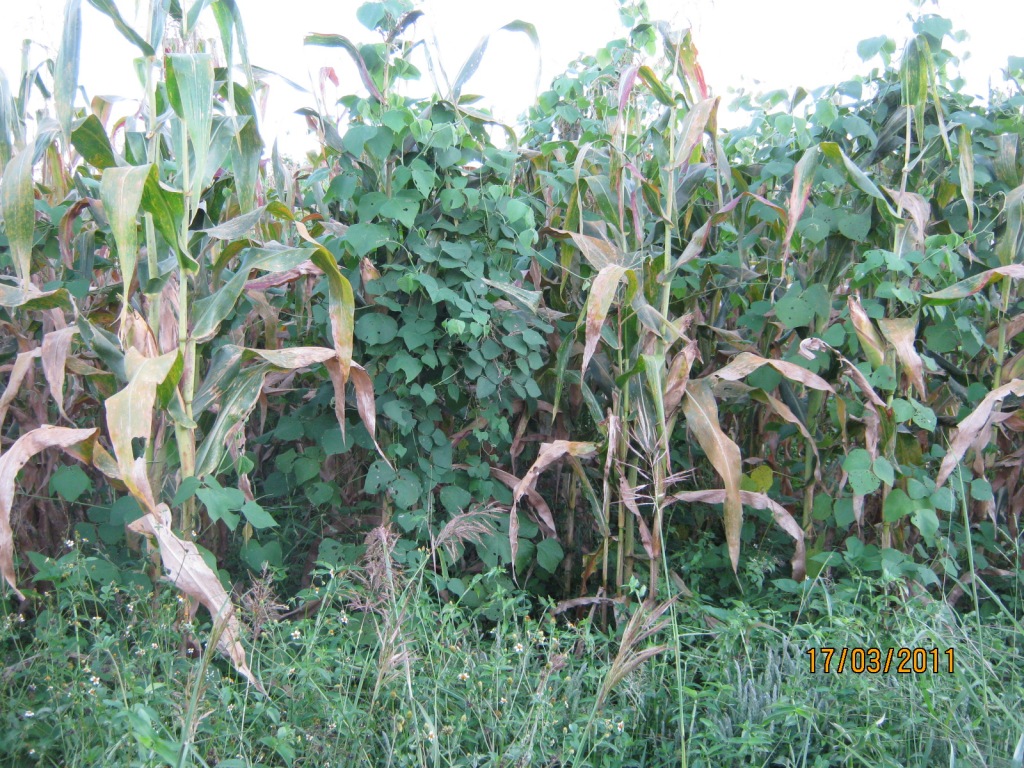
Maize intercropped with dolichos lab-lab — a high-biomass annual legume.
The central issue is organic matter. Organic matter drives the water and nutrient cycles. Soils with abundant organic matter absorb more rain, hold more moisture, feed more soil organisms, and require far fewer external inputs to produce good yields.
Practical solutions
Intercropping with legumes
The following intercrop combinations have been trialled at the Kafue demo farm:
- Maize / dolichos lab-lab — lab-lab produces high biomass and fixes atmospheric nitrogen
- Maize / velvet bean (Mucuna pruriens) — velvet bean is the most aggressive weed suppressor of all the legumes trialled; fixes large amounts of nitrogen and is not eaten by livestock so protects itself during the dry season
- Sunnhemp (Crotalaria juncea) — planted in pure stands or between maize rows; excellent nitrogen fixer, decomposes rapidly
- Cowpea between maize rows — cowpea is slashed as the maize tassels, acting as a high-nitrogen top dressing
- Pigeon pea between maize rows — long-term perennial; tap roots break compaction layers and access subsoil nutrients
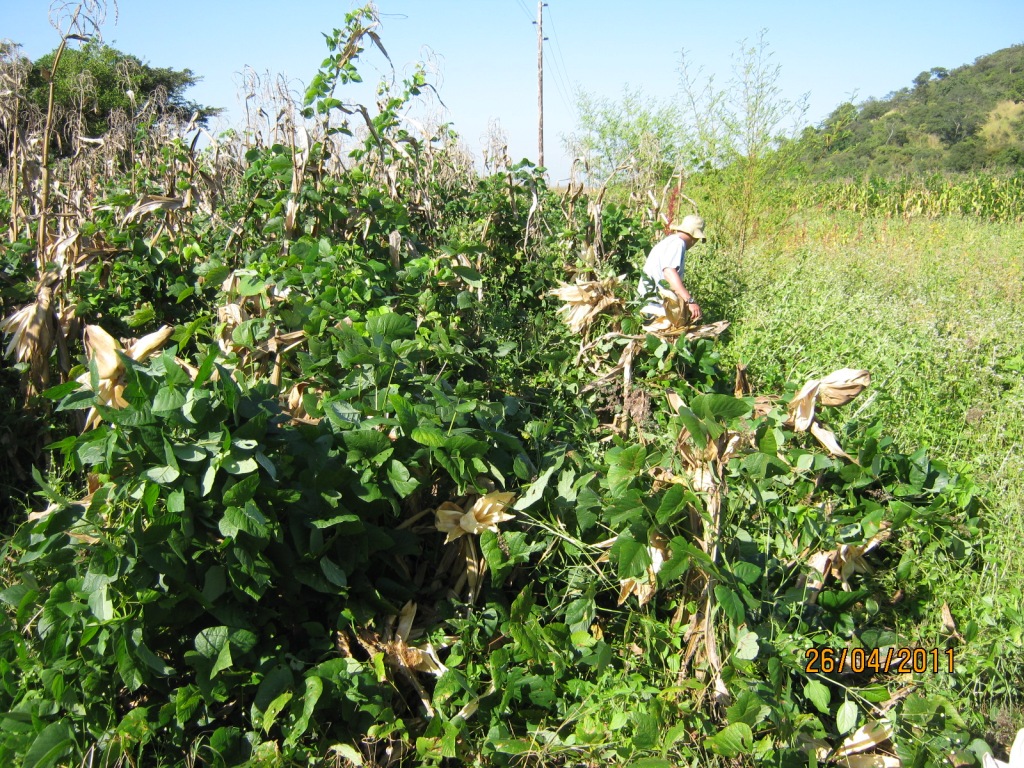
Maize growing with velvet bean.
Low-labour, high-nutrient compost
Using livestock manure and crop residues processed with minimum turning and maximum covering produces a consistent, high-quality compost that can be produced at 1 tonne/ha at relatively low labour cost.
Integrated animal husbandry
Animals that range over the cropping area return nutrients directly. Pigs, chickens and cattle can all be managed in ways that complement the cropping system — adding organic matter rather than depleting it.
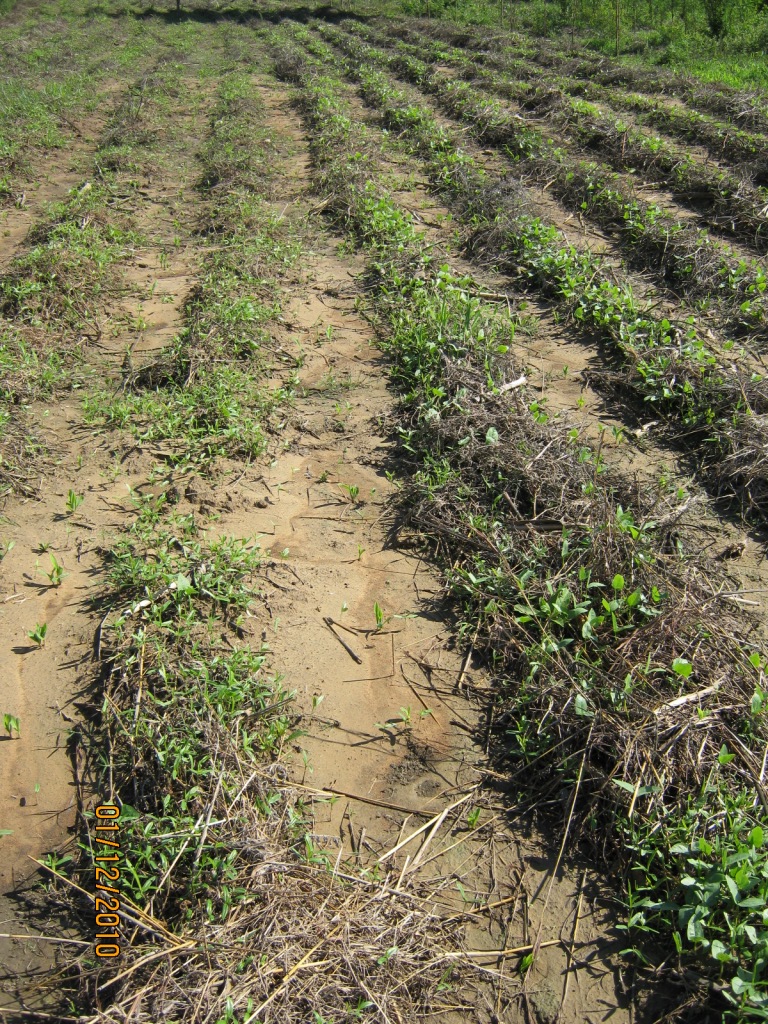
At 1 tonne of compost per hectare, we are achieving maize yields of around 6 tonnes/ha under rain-fed conditions — without any chemical fertiliser.
Future trials will include jack bean, climbing beans, silverleaf desmodium, and seven-year bean (Stylosanthes hamata).
Tags: Compost · Cropping · Intercropping · Low-input · Maize · Organic · Soil health